Summary:
• A successful installation depends on correct sizing, slope, downspout placement, and material choice matched to roof size and local rainfall patterns.
• Seamless aluminum or copper systems, cut on-site to fit each roofline, reduce seams that commonly cause leaks over time.
• Downspouts should discharge water several feet from the foundation to limit basement and crawlspace moisture risk.
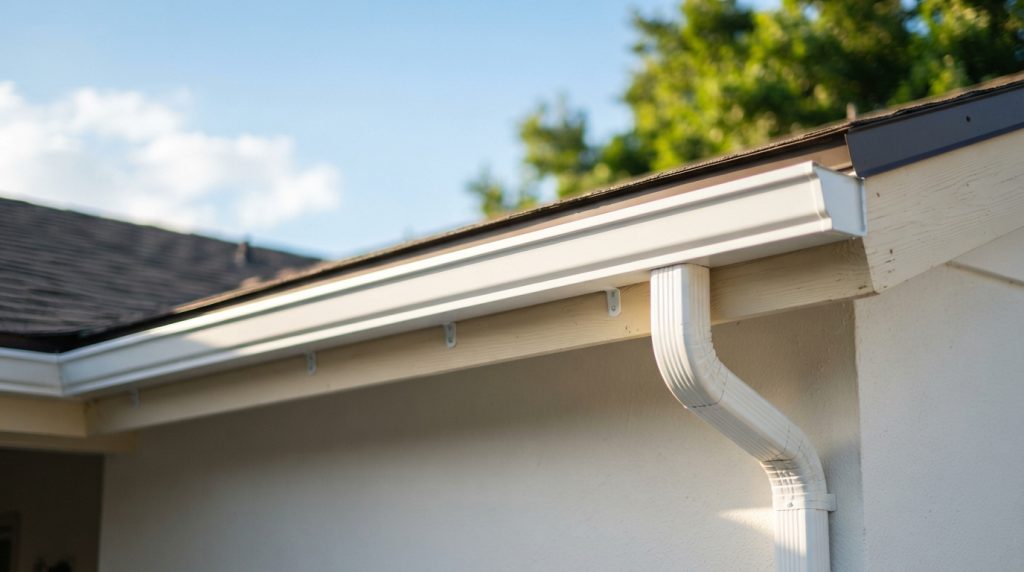
A properly completed Gutter Installation channels roof runoff away from siding, foundations, and landscaping before water has a chance to pool or freeze against the structure. Getting this right requires attention to gutter size, slope, hanger spacing, and downspout placement rather than a one-size-fits-all approach. Town & Country Seamless Gutters works from a base in Durham, CT, and the same installation principles apply whether a home sits on a wooded lot or along a coastal road in Old Saybrook.
Sizing and Material Selection
Gutter capacity has to match the roof area it drains, not just the style of the house. Oversized roofs or steep pitches generate faster runoff, which can overwhelm an undersized trough during heavy storms.
• Standard 5-inch K-style gutters suit most residential roofs.
• Larger 6-inch profiles handle steeper rooflines or larger catchment areas.
• Seamless aluminum resists corrosion and requires less maintenance than sectional systems.
• Copper offers a longer service life but carries a higher material cost.
Seamless systems are cut on-site to match the exact dimensions of a roofline, which reduces the number of joints where leaks typically start.
Slope, Pitch, and Hanger Placement
A gutter that looks level can still fail if it lacks the correct pitch toward the downspout. The DOE Building America Solution Center notes that good water management practices, including correctly sloped gutters and perimeter drainage, help protect a foundation from water saturation. Hangers spaced too far apart allow sagging, which creates low points where debris and standing water collect.
|
Component |
Typical Spec |
Why It Matters |
|
Gutter slope |
About 1/4 inch per 10 feet |
Moves water steadily toward downspouts |
|
Hanger spacing |
Every 24-36 inches |
Prevents sagging under rain and ice load |
|
Downspout count |
One per 35-40 feet of gutter |
Keeps up with runoff volume |
Downspout Placement and Drainage
Where water exits the downspout matters as much as how it travels through the gutter. The U.S. Department of Energy’s building science guidance recommends installing gutters and downspouts that terminate at least five feet from the foundation to limit soil saturation near the building. In parts of Old Saybrook with older housing stock, grading issues near the foundation can make this distance even more important for preventing basement moisture.
• Extend downspouts or connect them to buried drainage pipe where grading slopes toward the house.
• Avoid tying downspout discharge directly into a foundation drain system.
• Check that splash blocks or extensions remain in place after seasonal freeze-thaw cycles.
Local Conditions That Affect Installation Decisions
Coastal exposure, tree cover, and seasonal storm patterns all influence how a gutter system performs over time. Homes near the shoreline face salt air and wind-driven rain, while wooded properties deal with heavier leaf and debris loads that can clog standard screens faster. These conditions do not change the core installation steps, but they do affect material choice, gutter guard selection, and how often a system needs inspection.
Based in Durham, CT, Town & Country Seamless Gutters serves customers across Old Saybrook, applying the same sizing, slope, and drainage standards described above to homes throughout the region.
Frequently Asked Questions
How long does a typical gutter installation take? Most single-family homes can be fitted in a single day, though larger or more complex rooflines may require additional time for custom-cut seamless sections.
What is the ideal gutter slope? A slope of roughly 1/4 inch per 10 feet of gutter run is a commonly cited standard for keeping water moving steadily toward downspouts.
Do seamless gutters really leak less than sectional ones? Seamless systems have fewer joints along the length of the gutter, which reduces the number of potential leak points compared to sectional gutters assembled from multiple pieces.
How far should downspouts discharge from the house? Guidance from the Department of Energy points to a minimum of five feet from the foundation, with some sources recommending extensions of four to six feet for additional protection.
Business Information
View Town & Country Seamless Gutters Site is listed as a gutter installation, repair, and protection system provider operating out of Durham, CT.
Published details for View Town & Country Seamless Gutters Site cover service area information relevant to Connecticut homeowners.

Abel Abboud
Abel Abboud, a seasoned wordsmith, specializes in weaving narratives that breathe life into the world of Home Improvement. Armed with a keen eye for detail and a passion for transformative spaces, Abel has become a recognized voice in the industry.
His writing is a vibrant tapestry of inspiration and practicality, where each word contributes to the symphony of creating beautiful, functional homes. Abel's exploration of Home Improvement isn't just about trends; it's a journey into the heart of design innovation, sustainability, and the art of hands-on projects.
Abel Abboud's articles serve as a compass for those navigating the diverse realms of interior and exterior enhancements. From unraveling the secrets of contemporary designs to demystifying the latest technologies, Abel brings forth a dynamic narrative that captivates and educates.
In the ever-evolving landscape of Home Improvement, Abel's commitment to delivering fresh, relevant, and insightful content shines through. His prose reflects not just expertise, but a genuine desire to empower readers, helping them turn their living spaces into personalized havens.
Guided by a belief that home transformation is an art, Abel Abboud invites readers into a world where creativity meets practicality. Through his distinct voice and thoughtful exploration, Abel inspires a sense of possibility and excitement, making the Home Improvement journey an engaging adventure for all who embark on it.

