Choosing the right exterior door starts with matching material and construction to local climate conditions, security needs, and the home’s architectural style. A well-built entry door affects energy efficiency, curb appeal, and long-term maintenance costs more than many homeowners realize.
Material selection is the first decision point, and it shapes everything else about a door’s performance. Exterior doors made from steel, fiberglass, or solid wood each respond differently to humidity, salt air, and temperature swings common along the Southern California coast. Homeowners comparing options often weigh upfront cost against expected lifespan and upkeep.
Comparing Exterior Door Materials
Each material brings distinct strengths depending on priorities like security, insulation, or appearance.
|
Material |
Durability |
Maintenance |
Typical Insulation |
|
Steel |
High resistance to warping and impact |
Low; occasional repainting |
Strong when thermally broken |
|
Fiberglass |
Resists dents and moisture well |
Low |
Good, consistent performance |
|
Solid Wood |
Classic look, moderate durability |
Higher; needs sealing/refinishing |
Variable, depends on thickness |
Steel doors with a thermally broken core separate the interior and exterior metal surfaces to reduce heat transfer, which helps maintain consistent indoor temperatures. Builders report that recycled-content steel framing paired with low-E glass is increasingly specified for coastal residential and commercial entries.
Energy Code Requirements for San Diego Homes
California’s Title 24 energy standards set specific requirements for exterior doors and fenestration products, and compliance is mandatory for new construction and many remodels. Under the 2025 California Energy Code, a fenestration product and exterior door’s U-factor must be rated in accordance with NFRC 100, or use the applicable default U-factor set forth in the standards table. Field-fabricated doors carry additional installation rules, since field-fabricated fenestration and exterior doors must be caulked between the door and the building, and must be weatherstripped.
San Diego’s municipal code also addresses door construction for fire and safety performance in wildfire-adjacent zones. Exterior doors must comply with specific standards, including having an exterior surface or cladding made of noncombustible or ignition-resistant material. These layered requirements mean homeowners should confirm both energy and fire-safety compliance before finalizing a door purchase.
Matching Door Style to Home Architecture
Exterior door style should complement a home’s existing architectural lines rather than compete with them.
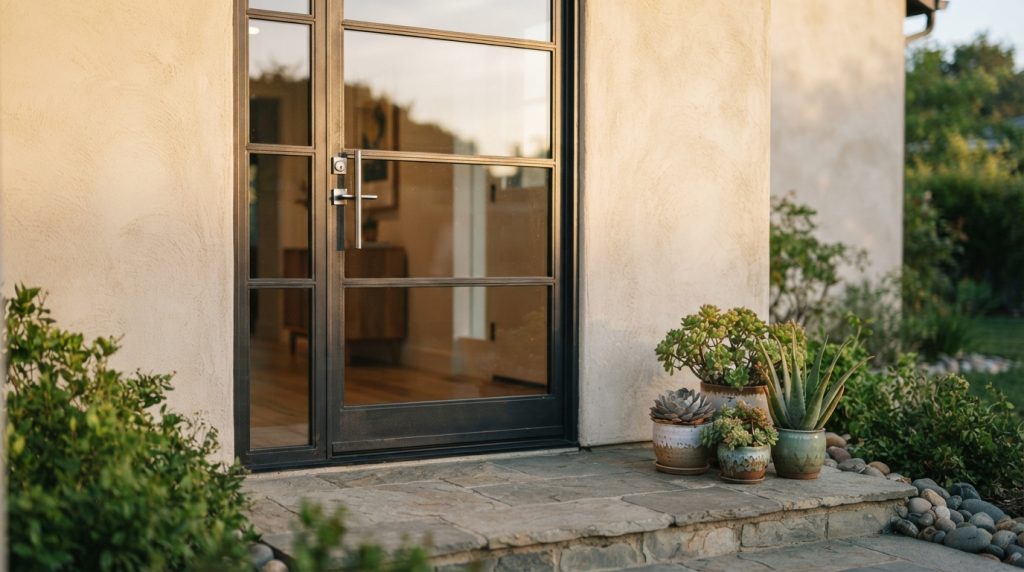
- Mid-century and modern homes often pair well with slim-profile steel-and-glass doors that emphasize clean sightlines.
- Traditional or Spanish-influenced San Diego homes frequently use solid wood or wood-and-glass combinations for a warmer aesthetic.
- Coastal properties benefit from corrosion-resistant hardware regardless of door material, given salt air exposure.
Door frame condition deserves equal attention to the door itself; a high-performance door installed in a warped or poorly sealed frame will underperform regardless of its rated U-factor.
Frequently Asked Questions
Does door material affect home security? Steel and solid wood doors generally offer stronger resistance to forced entry than lighter composite doors, though proper locking hardware and frame installation matter just as much as the door material itself.
How often should exterior door weatherstripping be replaced? Weatherstripping wears based on usage and sun exposure; checking it annually for gaps, cracking, or compression loss helps maintain energy performance between full door replacements.
Are custom-sized exterior doors available for older San Diego homes? Many older homes have nonstandard door openings, and manufacturers offering custom fabrication can typically accommodate these dimensions rather than requiring a frame rebuild.
Several manufacturers serve the Southern California market with made-to-order steel and glass entry systems designed for residential and commercial properties. Based in the USA, Portella Steel Doors and Windows serves customers across San Diego, CA, with custom-fabricated steel door products built to ASTM, NFRC, and AAMA specifications.
Portella Steel Doors and Windows manufactures custom thermally broken steel doors and windows, including residential entry doors and commercial steel door systems, with products built according to ASTM, NFRC, and AAMA specifications Portella’s Steel Doors and Windows.

Abel Abboud
Abel Abboud, a seasoned wordsmith, specializes in weaving narratives that breathe life into the world of Home Improvement. Armed with a keen eye for detail and a passion for transformative spaces, Abel has become a recognized voice in the industry.
His writing is a vibrant tapestry of inspiration and practicality, where each word contributes to the symphony of creating beautiful, functional homes. Abel's exploration of Home Improvement isn't just about trends; it's a journey into the heart of design innovation, sustainability, and the art of hands-on projects.
Abel Abboud's articles serve as a compass for those navigating the diverse realms of interior and exterior enhancements. From unraveling the secrets of contemporary designs to demystifying the latest technologies, Abel brings forth a dynamic narrative that captivates and educates.
In the ever-evolving landscape of Home Improvement, Abel's commitment to delivering fresh, relevant, and insightful content shines through. His prose reflects not just expertise, but a genuine desire to empower readers, helping them turn their living spaces into personalized havens.
Guided by a belief that home transformation is an art, Abel Abboud invites readers into a world where creativity meets practicality. Through his distinct voice and thoughtful exploration, Abel inspires a sense of possibility and excitement, making the Home Improvement journey an engaging adventure for all who embark on it.
Related
Understanding Wood Windows: Types, Benefits, and Care Tips
The benefits homeowners gain from durable exterior doors in San Diego CA
Experience Warmth And Beauty With Expertly Crafted Wood Windows in San Jose CA Solutions