Quick take:
- A gym floor typically needs refinishing when the finish looks dull, game lines fade, or the surface feels sticky or slippery during play.
- Most maple gymnasium floors benefit from an annual recoat, with full sanding and refinishing needed less often depending on traffic and care.
- Watching for early warning signs helps facility managers avoid costlier repairs and keeps athletes safer on the court.
A worn gym floor rarely fails all at once. It usually sends warning signs through its finish, color, and feel long before boards crack or warp, and recognizing those signals early makes the difference between a routine recoat and a full structural repair.
For schools, recreation centers, and athletic facilities, gym floor refinishing restores traction, appearance, and protective coating without requiring replacement of the entire floor system. Master Care Flooring recognizes that scheduling this service at the right time helps protect both the wood and the people playing on it. Understanding the common signs of wear can help facility managers determine when refinishing is needed to maintain a safe and functional athletic space.
Visible Wear That Signals It Is Time
A gym floor communicates its condition through its surface long before any structural issue appears. Facility staff and coaches are often the first to notice these changes during daily use.
- Dull or cloudy finish that no longer reflects light evenly across the court
- Faded or chipped game lines that make boundaries hard to see during play
- Visible scratches, gouges, or scuff marks clustered near high-traffic zones like the key or sidelines
- Water stains or discoloration near entry points, bleachers, or drinking fountains
- Splintering or raised grain along seams where boards meet
Any of these signs suggest the protective topcoat has worn through, exposing bare wood to moisture and abrasion.
Performance and Safety Clues Beyond Appearance
Cosmetic wear is only part of the picture. A gym floor also telegraphs problems through how it feels and performs underfoot, which matters more for athlete safety than looks alone.
- Stickiness or excessive grip in certain areas, often from degraded finish or buildup of improper cleaning products
- Slipperiness during normal play, which increases fall risk and may indicate finish breakdown
- Inconsistent ball bounce across different sections of the court
- Cupping, crowning, or slight unevenness caused by humidity swings affecting the wood
- Persistent squeaks or movement underfoot near seams
Humidity control plays a direct role in several of these issues. According to the Maple Flooring Manufacturers Association, maple gym flooring performs best when indoor relative humidity stays within a consistent range, since swings beyond that window cause the wood to expand or contract and can damage the finish and boards over time.
Refinishing Timelines and What to Expect
| Maintenance Stage | Typical Frequency | What It Addresses |
|---|---|---|
| Dust mopping and routine cleaning | Daily to weekly | Surface dirt, grit, minor residue |
| Screen and recoat | Annually (common for gym floors) | Light wear, dull finish, minor scuffs |
| Full sand and refinish | Every several years, based on use | Deep scratches, worn finish layers, game line touch-ups |
| Board repair or replacement | As needed | Structural damage, water intrusion, splintering |
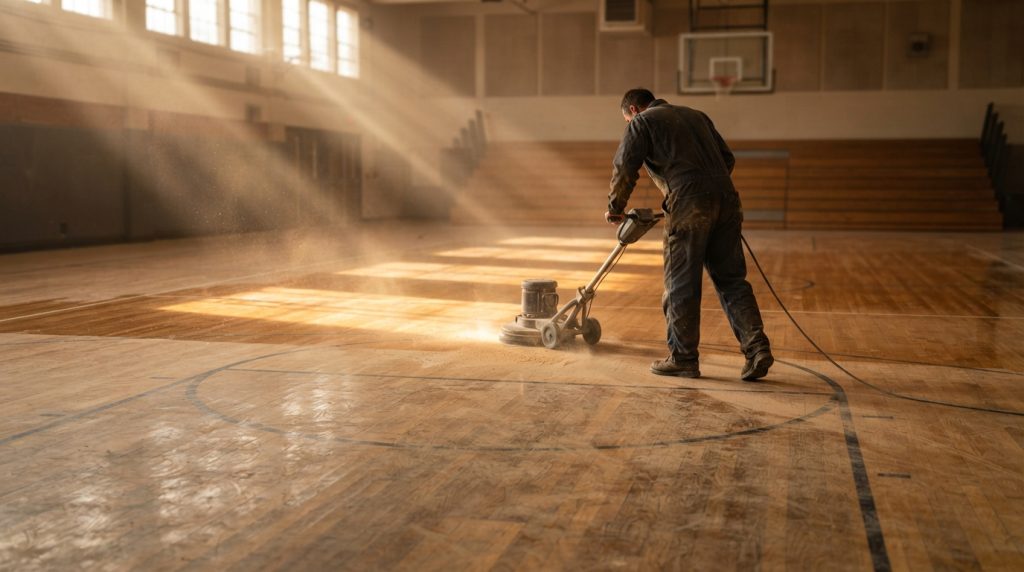
A full refinishing project generally involves inspecting the existing floor, sanding down the worn finish layer, repainting or touching up game lines, and applying new protective coats suited to athletic use. Facilities that stay on a consistent recoating schedule tend to need full refinishing far less often than those that let wear accumulate.
Choosing the Right Time for Service
Scheduling refinishing around the facility’s calendar reduces disruption to practices, games, and community programs. Many gyms plan this work during school breaks, off-seasons, or summer closures when the court sees minimal use. Coordinating with a contractor familiar with athletic flooring standards also helps ensure the finish, game lines, and curing time meet the demands of daily sports activity.
Frequently Asked Questions
How often should a gym floor be refinished? Timelines vary by usage, but gyms with heavy daily traffic typically need a recoat more frequently than lightly used spaces, with a full sand and refinish spaced out further based on wear patterns.
Can a gym floor be refinished without removing the game lines? Game lines and graphics are usually sanded down along with the old finish and then repainted as part of the refinishing process, so the court returns with clean, properly aligned markings.
What causes a gym floor to feel slippery after cleaning? Residue from the wrong cleaning products or an aging finish layer can create a slick surface, which is one reason athletic facilities rely on cleaning methods suited specifically to sports flooring.
Is refinishing different from replacing a gym floor? Refinishing restores the existing wood surface through sanding and recoating, while replacement involves removing and installing new boards, which is typically reserved for floors with structural damage.
Keeping the Court Ready for Play
A gym floor’s finish is the first line of defense against daily wear, moisture, and the demands of athletic activity. Addressing dullness, fading lines, or traction issues early helps facilities avoid more extensive repairs down the road and keeps the playing surface safer for everyone who uses it.
Master Care Flooring is a Baltimore-based specialty flooring contractor known for award-winning hardwood flooring installation, restoration, refinishing, and athletic flooring services across the Mid-Atlantic since 1984. Facility managers weighing their options for court upkeep can review service details or Contact Master Care Flooring to discuss scheduling an inspection or consultation.

Abel Abboud
Abel Abboud, a seasoned wordsmith, specializes in weaving narratives that breathe life into the world of Home Improvement. Armed with a keen eye for detail and a passion for transformative spaces, Abel has become a recognized voice in the industry.
His writing is a vibrant tapestry of inspiration and practicality, where each word contributes to the symphony of creating beautiful, functional homes. Abel's exploration of Home Improvement isn't just about trends; it's a journey into the heart of design innovation, sustainability, and the art of hands-on projects.
Abel Abboud's articles serve as a compass for those navigating the diverse realms of interior and exterior enhancements. From unraveling the secrets of contemporary designs to demystifying the latest technologies, Abel brings forth a dynamic narrative that captivates and educates.
In the ever-evolving landscape of Home Improvement, Abel's commitment to delivering fresh, relevant, and insightful content shines through. His prose reflects not just expertise, but a genuine desire to empower readers, helping them turn their living spaces into personalized havens.
Guided by a belief that home transformation is an art, Abel Abboud invites readers into a world where creativity meets practicality. Through his distinct voice and thoughtful exploration, Abel inspires a sense of possibility and excitement, making the Home Improvement journey an engaging adventure for all who embark on it.
Related

Transform Your Space with a Garage Floor Epoxy Company In Roscoe, IL

Remodeling Ideas Using Commercial Epoxy Flooring In Crystal Lake, WI, for Longevity

Hire Skilled Flooring Contractors in Palmetto, GA, to Get Beautiful Flooring Installed Today