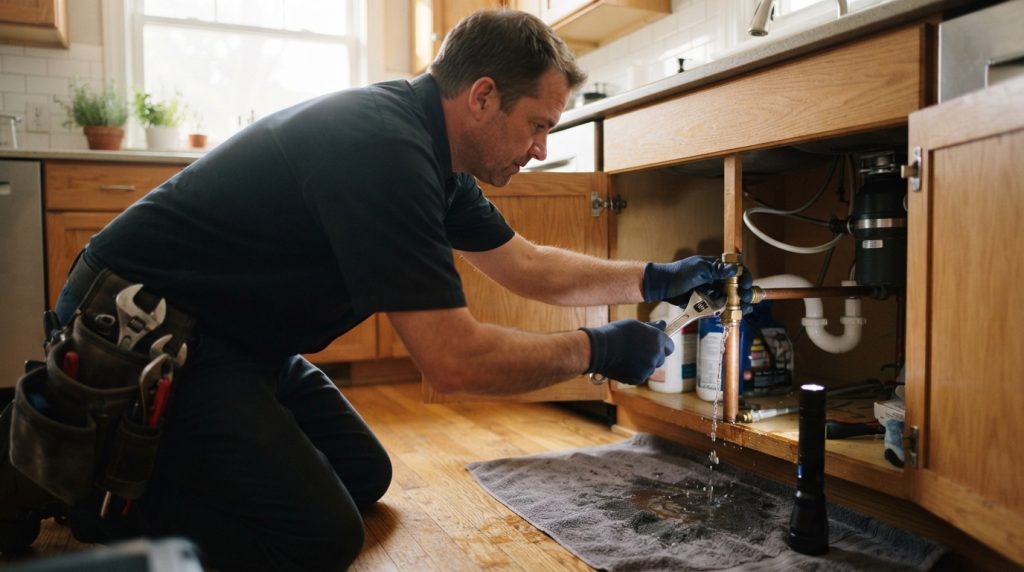
Calling for help during a plumbing crisis usually sets off a predictable sequence: phone screening, dispatch, on-site assessment, and repair. Knowing what happens at each stage helps homeowners stay calm and make faster decisions when water is already spreading across a floor.
Most residential plumbing failures are not minor inconveniences. An emergency plumbing service is typically reserved for situations where delay causes structural damage, health risks, or a complete loss of water service, such as burst pipes, sewage backups, or failed water heaters. Dispatchers generally ask a short series of questions about the water source, whether the main shutoff has been located, and how long the issue has been active.
What Happens During the Initial Call
The first few minutes on the phone shape everything that follows. A dispatcher or on-call plumber usually asks the caller to describe the problem in plain terms before giving any instructions.
- Location of the leak or backup (kitchen, bathroom, basement, or exterior line)
- Whether the main water shutoff valve has already been closed
- Visible damage, standing water, or unusual sounds from pipes or fixtures
- Whether the issue affects one fixture or the entire home
Based on these answers, the plumber can often advise on immediate steps, such as shutting off water at the main valve, before anyone even arrives on site.
On-Site Diagnosis and Repair Process
Once a technician arrives, the visit typically follows a structured process rather than guesswork. Most emergency calls move through the same basic stages regardless of the specific fixture involved.
1. Initial inspection to confirm the source and severity of the leak or backup
2. Containment steps, such as shutting off water or isolating the affected line
3. Diagnostic testing, which may include camera inspection for drain or sewer issues
4. A written or verbal explanation of repair options before work begins
5. Completion of the repair, followed by a test to confirm the fix holds
Homeowners in Georgetown, TX should expect the plumber to explain pricing before starting repair work, particularly for after-hours or weekend calls, since rates often differ from standard daytime service.
Common Causes Behind After-Hours Calls
|
Issue |
Typical Warning Sign |
Risk if Delayed |
|
Burst or frozen pipe |
Sudden pressure drop, visible water |
Structural and flooring damage |
|
Water heater failure |
No hot water, rust-colored water, popping sounds |
Flooding, tank rupture |
|
Sewer line backup |
Multiple drains backing up at once |
Contamination, health hazard |
|
Major fixture leak |
Pooling water near toilet, sink, or washer |
Mold growth, subfloor rot |
Certain issues account for the majority of urgent plumbing calls, and recognizing them early can reduce response time.
Winter freeze events are a recurring concern across Central Texas. The National Weather Service notes that temperatures across the region can drop sharply during winter storm systems, conditions that have historically contributed to widespread pipe bursts in homes without adequate insulation.
Based in USA, Capital City Plumbing & Drain serves customers across Georgetown, TX, and the Capital City Plumbing & Drain profile lists plumbing service as part of its listed offerings for the area.
Frequently Asked Questions
How fast should a plumber respond to an emergency call? Response times vary by time of day, weather conditions, and local demand, but most on-call plumbers aim to reach active flooding or sewage situations faster than routine appointments.
Should the water be shut off before the plumber arrives? Yes, locating and closing the main shutoff valve is usually the first step a dispatcher recommends, since it limits water damage while help is on the way.
Are after-hours rates higher than standard service calls? Many plumbing companies apply different pricing for nights, weekends, or holidays, so it is reasonable to ask about cost before any work begins.
What qualifies as a true plumbing emergency? Active flooding, sewage backup, complete loss of water, and gas-adjacent water heater failures are generally treated as urgent, while slow drips or minor clogs often wait for regular business hours.
Emergency plumbing situations rarely follow a convenient schedule, which makes understanding the response process more useful before a pipe actually bursts. Current availability details for Capital City Plumbing & Drain are published for the local service area.

Abel Abboud
Abel Abboud, a seasoned wordsmith, specializes in weaving narratives that breathe life into the world of Home Improvement. Armed with a keen eye for detail and a passion for transformative spaces, Abel has become a recognized voice in the industry.
His writing is a vibrant tapestry of inspiration and practicality, where each word contributes to the symphony of creating beautiful, functional homes. Abel's exploration of Home Improvement isn't just about trends; it's a journey into the heart of design innovation, sustainability, and the art of hands-on projects.
Abel Abboud's articles serve as a compass for those navigating the diverse realms of interior and exterior enhancements. From unraveling the secrets of contemporary designs to demystifying the latest technologies, Abel brings forth a dynamic narrative that captivates and educates.
In the ever-evolving landscape of Home Improvement, Abel's commitment to delivering fresh, relevant, and insightful content shines through. His prose reflects not just expertise, but a genuine desire to empower readers, helping them turn their living spaces into personalized havens.
Guided by a belief that home transformation is an art, Abel Abboud invites readers into a world where creativity meets practicality. Through his distinct voice and thoughtful exploration, Abel inspires a sense of possibility and excitement, making the Home Improvement journey an engaging adventure for all who embark on it.


